
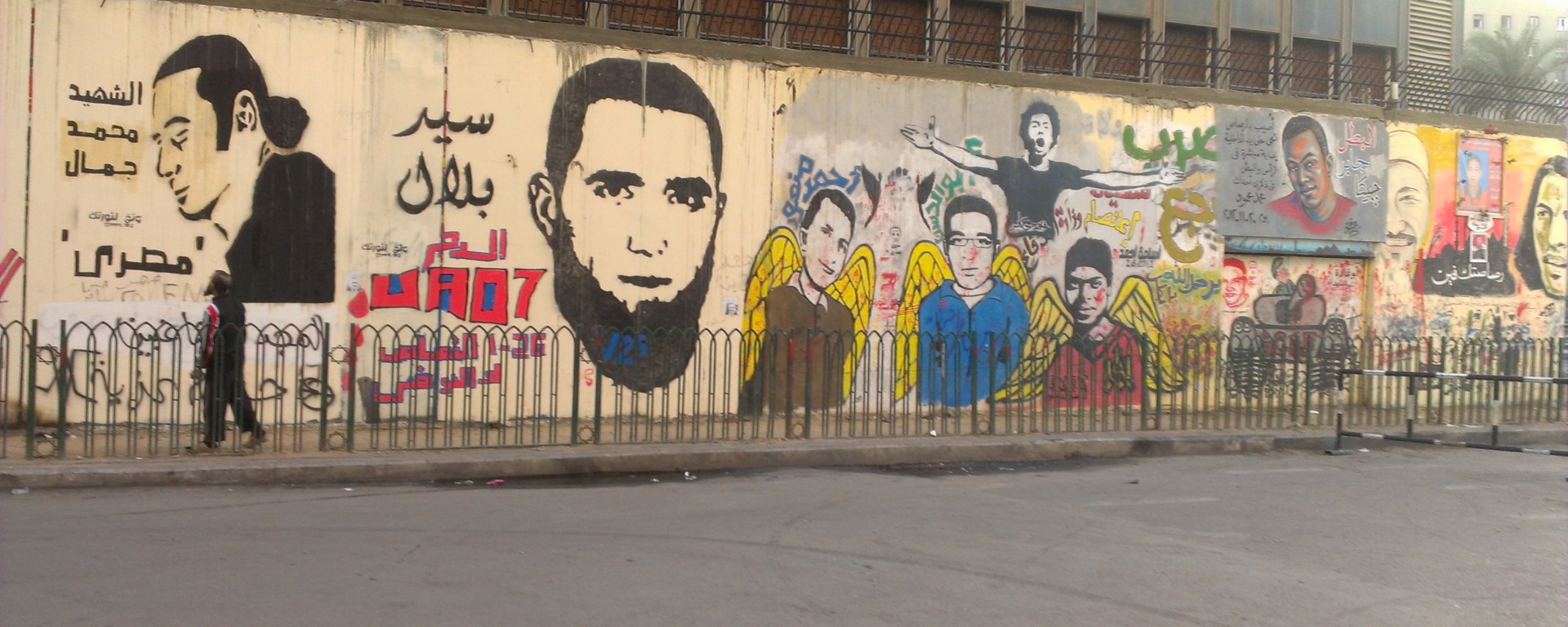
[This article is Part 1 of 2 in this series on music politics in the wake of the 2011 Arab Uprisings.]
One Thursday afternoon in mid-August 2011, I was sitting in a minivan on the road heading from Damascus to Homs. The boiling heat melted my joints. It was muggy, and it took a long time to pass through the sluggish traffic on the main roads leading out of Damascus. Wide boulevards shrunk to a single lane by state security checkpoints in anticipation of the protests that came out after prayers every Friday.
Novel political sentiments sprouted profusely in 2011, and by August of that year, every moment felt like it was pregnant with a historical manifestation. I was sitting in that minivan thinking about the last nine months since many Arab streets had flourished with immense energy, producing realities we had thought impossible. Up until that moment, the Arab uprisings were still an infant struggling out of the womb of the last century, not knowing whether it would see the light or get strangled to death by the umbilical cord of post-colonial imperialist designs. The popular explosions that stormed the Arab world, from Tunisia to Yemen in 2011, took many of us by surprise. Attention was hijacked by the fast changes that were mediated by a constant flow of information flooding our screens. It was a refreshing spectacle to watch in real time when tyrants were toppled in the streets. It was hypnotizing to listen to slogans chanted in broad daylight that used to be whispered carefully in the dark. Continue reading here on Jadaliyya

 Words Of Action كلمات الفعل